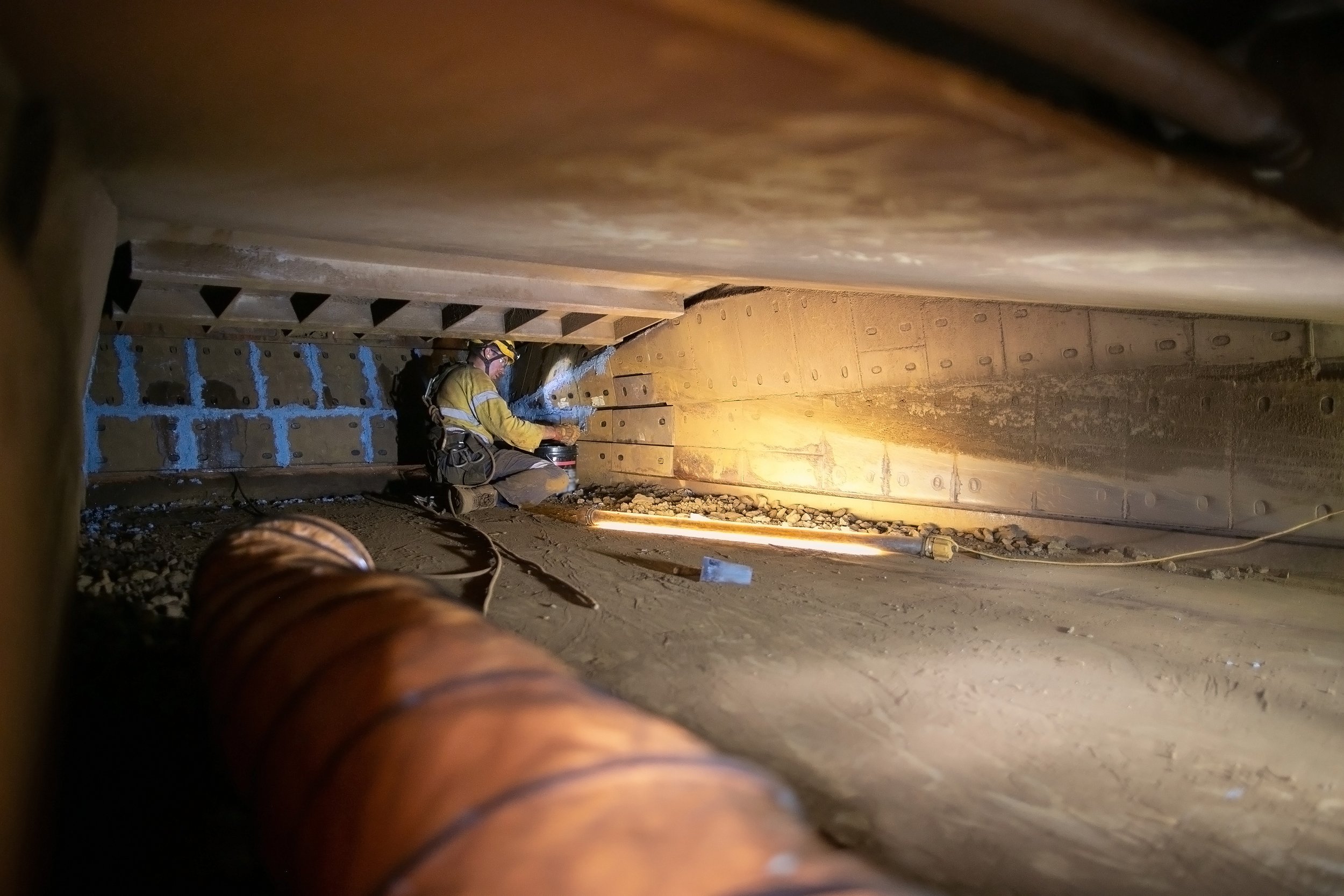
Lockout/Tagout
Learn how to identify, isolate, control, and verify hazardous energy before maintenance, servicing, repair, cleaning, adjustment, or other work begins. Our LOTO Training includes hands-on practical instruction and can be customized around your workplace machinery and existing Lockout/Tagout procedures.
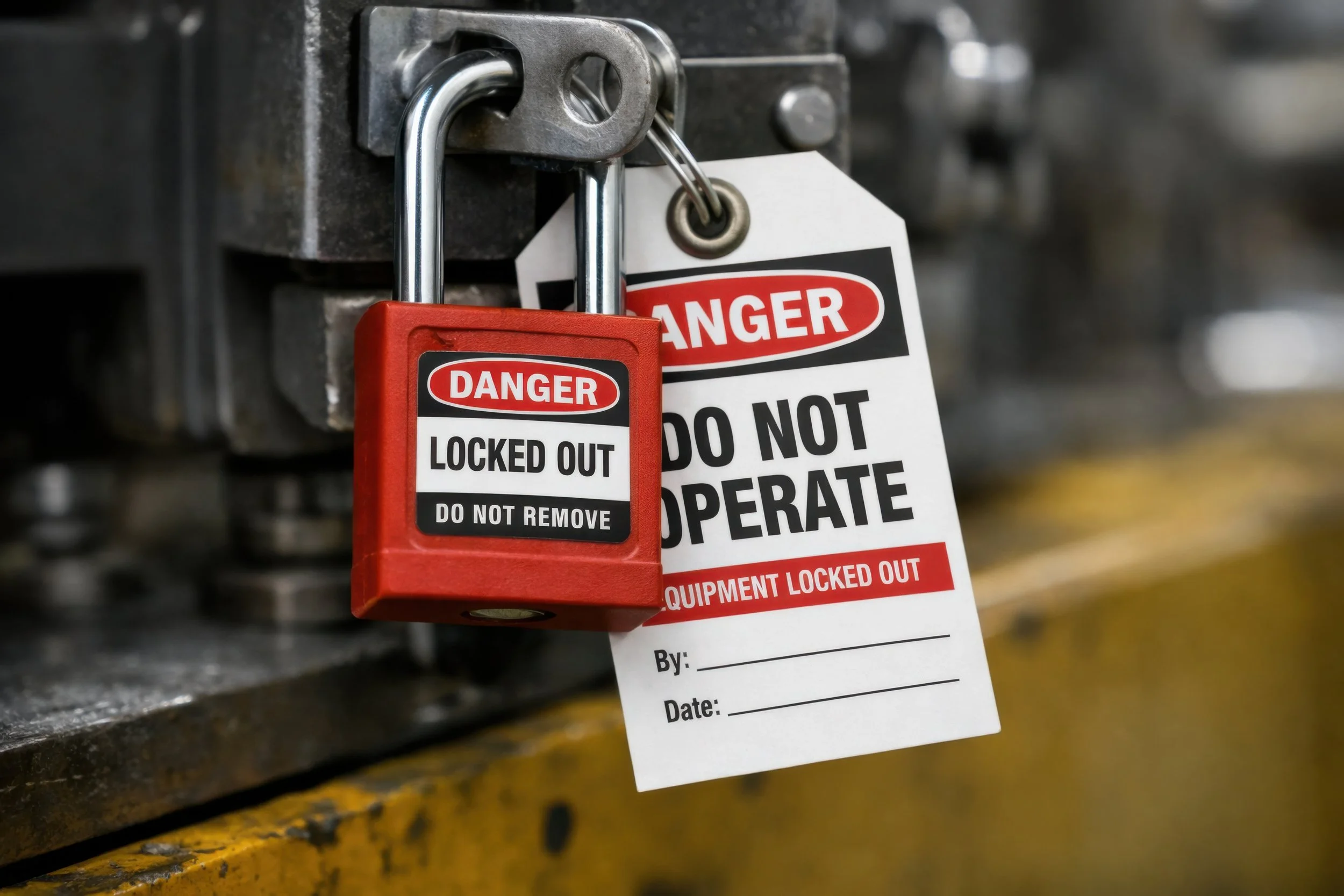
Control Hazardous Energy Before Work Begins
Lockout/Tagout, commonly called LOTO, is a hazardous-energy-control process used to prevent machinery or equipment from unexpectedly starting, moving, becoming energized, releasing pressure, or releasing stored energy while maintenance, servicing, repair, setup, cleaning, adjustment, troubleshooting, or other work is being performed.
Hazardous energy is not limited to electricity. Workers may encounter electrical, mechanical, hydraulic, pneumatic, thermal, chemical, gravitational, and other stored or residual energy. Understanding all relevant energy sources is an important part of preventing unexpected movement, energization, or energy release.
One of the course's key concepts is that stopping equipment is not necessarily the same as isolating hazardous energy. A stop button, emergency stop, OFF control, or software command does not automatically eliminate every energy source. Workers need to understand the workplace procedure and identify the actual energy-isolating devices that must be controlled.
Participants learn the general sequence used to shut down equipment, isolate hazardous energy, apply lockout controls, address stored or residual energy, and verify effective isolation before work begins. Installing a lock alone does not prove that machinery or equipment is safe to work on.
The course includes a hands-on practical component using locks, tags, energy-isolation devices, and/or suitable training equipment. These activities help participants apply hazardous-energy-control concepts while reinforcing that general LOTO training does not replace the procedures required for a specific workplace, machine, process, energy source, or worker responsibility.
Lockout/Tagout requirements vary according to the workplace and work being performed. Ontario Regulation 851 contains hazardous-motion, machine-start-up, and electrical lockout requirements for applicable industrial work, while other requirements may apply in construction and other settings. CSA Z460 is also a relevant Canadian standard addressing control of hazardous energy.
Course Topics and Learning Outcomes
Build an understanding of hazardous-energy control, including energy identification, isolation, stored-energy control, verification, and the importance of workplace-specific procedures.
Recognize Hazardous Energy
Identify electrical, mechanical, hydraulic, pneumatic, thermal, chemical, gravitational, and other energy sources that may create hazards during servicing or maintenance.
Understand Energy Isolation
Understand the difference between shutting equipment down and effectively isolating hazardous energy.
Apply Lockout Principles
Understand the general sequence used to shut down, isolate, and secure machinery or equipment before work begins.
Control Stored Energy
Recognize residual or stored energy that may remain after shutdown and understand why it must be released, blocked, restrained, or otherwise controlled.
Verify Isolation
Understand why effective energy isolation must be verified before servicing, maintenance, or other work begins.
Follow Workplace Procedures
Understand the importance of equipment-specific procedures, worker responsibilities, lock removal, and controlled return to service.
Who This Course Is For
Lockout/Tagout training is intended for workers and supervisors whose duties involve servicing, maintaining, repairing, cleaning, adjusting, troubleshooting, setting up, or working around machinery and equipment where uncontrolled hazardous energy could cause injury.
- Maintenance Workers
- Industrial & Manufacturing Workers
- Machine Operators
- Millwrights
- Electricians
- Mechanical Trades
- Construction Workers
- Facility-Maintenance Personnel
- Supervisors Overseeing Servicing or Energy-Isolation Work
- Other Workers Exposed to Uncontrolled Hazardous Energy
Training Your Team?
We offer private Lockout/Tagout training for groups of up to 12 participants. On-site sessions can be customized around suitable client machinery, hazardous-energy sources, isolation points, existing LOTO procedures, locks, tags, and worker responsibilities.
Frequently Asked Questions
Find answers about hazardous energy, hands-on training, equipment-specific procedures, certificate expiry, and customized on-site Lockout/Tagout training.
What types of hazardous energy do I need to consider during Lockout/Tagout?
Hazardous energy is not limited to electricity. It can include electrical, mechanical, hydraulic, pneumatic, thermal, chemical, gravitational, and stored or residual energy. The energy sources that need to be controlled depend on the equipment and work being performed.
Will I get hands-on Lockout/Tagout training?
Yes. The course includes a practical component using locks, tags, and/or isolation devices so you can apply hazardous-energy-control concepts. For on-site training, we can also customize the course around suitable workplace machinery and existing LOTO procedures where appropriate.
Does completing this course qualify me to lock out every machine?
No. General training teaches hazardous-energy-control principles, but you must also understand and follow the procedures that apply to your specific workplace, equipment, energy sources, and responsibilities.
Does my StartSafe Lockout/Tagout certificate expire?
StartSafe does not currently assign an expiry date to our Lockout/Tagout certificate. Ontario also does not establish one universal province-wide expiry period for a general LOTO training certificate. Employers remain responsible for ensuring workers receive the information, instruction, supervision, and workplace-specific procedures needed to work safely.
Can you provide Lockout/Tagout training at my workplace?
Yes. We offer private on-site group training and can customize the training around suitable workplace machinery, hazardous-energy sources, and existing LOTO procedures. Contact us to discuss your workplace, group size, and training needs.
Related Safety Courses
Explore additional training related to hazardous-energy control, equipment operation, confined-space hazards, and hazardous products.